
A batch of linden frames
Fourteen frames came off the bench this week: eight A3, four A4 and two at 50 × 70. That is a normal batch for us, and since people ask what goes into one, here is the week in order.
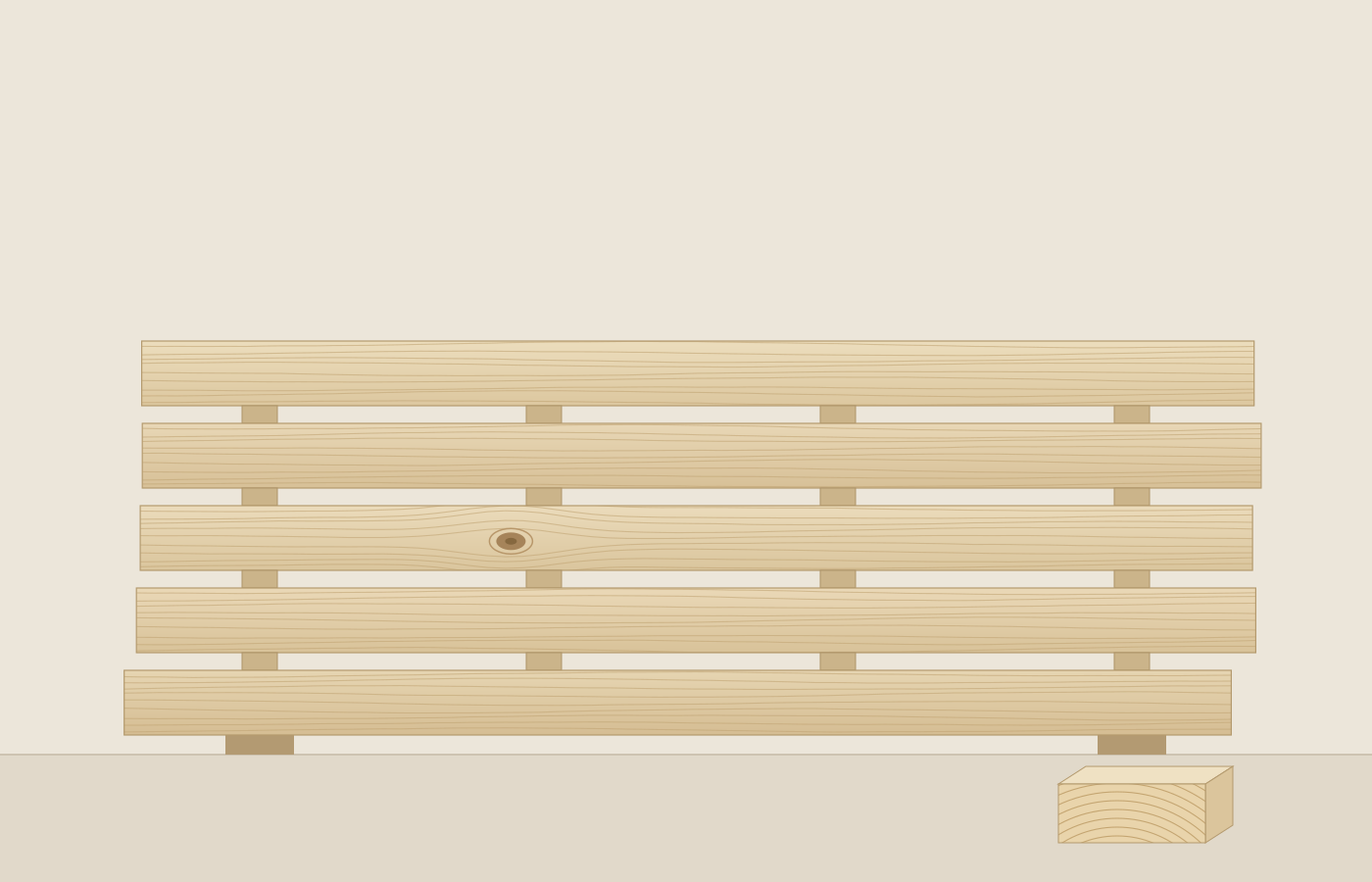
The boards arrived in early summer. Linden comes to us kiln-dried, but wood that is dry at the timber yard isn't necessarily settled in the room it will be worked in. So the boards sit in the workshop for weeks, stacked with thin sticks between them. When they stop changing weight from one week to the next, they are ready. Five boards of about two metres each are enough for a batch.
I use linden because it gets out of the way. It is pale, almost cream when freshly cut, with a grain so fine and even that you have to look for it, and no strong figure to compete with a print. It machines cleanly, smells faintly sweet, and once it is dry it stays still. The downside is that it is soft. Press a thumbnail into it and you will leave a mark, which is why the profile has slightly rounded edges and why the finish matters.
Day by day
Day one is ripping and planing: each board is cut into strips, and the strips are planed down to 20 × 24 mm. Day two is the rebate, the step on the back of the moulding where the glazing, mount, print and backing sit. I cut it on the table saw in two passes, 7 mm wide and 9 mm deep, then sand everything to 180 grit. Sanding finer than that makes linden look polished and slightly plastic; at 180 it keeps a dry, matte surface that suits the paper.
This batch had one surprise. A small, tight knot sat about a third of the way along the middle board, exactly where a long side of one of the 50 × 70 frames would have come from. In most woods a small knot is fine, but in a pale, plain moulding it looks like a mark on the glass. That length was cut out, and the knot went into the offcut box, which is slowly turning into a collection.
Day three is mitring and joining. The corners are cut at 45 degrees, glued, pinned from the back with V-nails and left clamped overnight. Day four is finishing: one thin coat of hard wax oil, rubbed in and buffed off. Linden darkens very slowly toward a light honey colour over the years. The oil doesn't stop that, and I wouldn't want it to.
The last day is fitting. Each print is hinged to its backing board with paper tape, the window mount goes over it, the glazing is cleaned on both sides, and everything is held in with framing points. The back is sealed with gummed paper tape and labelled with the title, edition number, size and seed. Then every frame is checked from the front, in daylight, one last time.
Of the fourteen, one went back to have its glazing cleaned again. There is always one.
Jonas